Only six episodes long, Golden Boy remains one of anime's funniest comedies. But while its adaptation became a beloved cult classic, the original manga took a very different and far more controversial direction.
There are countless comedy anime out there.
Some rely on clever dialogue. Others use ridiculous situations, exaggerated characters, or completely absurd premises to make their audiences laugh.
And then there's Golden Boy.
An anime starring a 25-year-old university dropout who rides around Japan on a bicycle, takes whatever job he can find, and somehow manages to make an absolute fool of himself in almost every situation imaginable.
It sounds ridiculous.
Because it is.
And that's precisely what makes it so wonderful.
Originally released between October 1995 and June 1996, Golden Boy is a six-episode original video animation (OVA) based on the manga written and illustrated by Tatsuya Egawa.
Directed by Hiroyuki Kitakubo and animated by A.P.P.P., the series combines outrageous comedy, exaggerated animation, unapologetic fanservice, and a surprisingly lovable protagonist.
More than thirty years after its debut, Golden Boy remains one of the most entertaining short anime experiences you can find.
But there's something particularly interesting about its legacy.
While the anime has developed a devoted following, its source material has earned a considerably more divisive reputation.
And after examining how the manga develops beyond the episodes adapted into animation, it's not difficult to understand why.
Golden Boy is one of those rare cases where the anime arguably understood what made the original premise enjoyable better than the manga's later chapters did.
Meet Kintaro Oe: The World's Most Ridiculous Genius
At the center of Golden Boy is Kintaro Oe.
He's 25 years old, constantly traveling, frequently unemployed, and seemingly incapable of behaving normally around an attractive woman.
At first glance, he appears to be a complete idiot.
He makes ridiculous facial expressions, becomes overwhelmed by the most ordinary situations, and routinely embarrasses himself in ways that would make almost anyone else want to disappear.
And yet, there's something unusual about Kintaro.
He's actually incredibly intelligent.
Before beginning his travels, Kintaro studied law at the prestigious University of Tokyo, completing his coursework before leaving without graduating.
Instead of pursuing a conventional professional career, he decides to travel around Japan and learn about life through firsthand experience.
Armed with little more than his trusty bicycle and a notebook, he moves from one temporary job to another.
Computer programming.
Restaurant work.
Swimming instruction.
And practically anything else that might teach him something new.
His philosophy is simple: there's more to learn about the world than what can be taught inside a classroom.
It's a surprisingly endearing premise.
Kintaro isn't motivated by money, fame, or some grand ambition to become the strongest person alive.
He simply wants to learn.
Of course, his enthusiasm for beautiful women repeatedly gets in the way.
And watching those two sides of his personality collide is where Golden Boy finds much of its comedy.
An Absolute Masterclass in Ridiculous Comedy
What makes Golden Boy so funny isn't simply that its protagonist is an idiot.
It's the sheer commitment with which the anime presents his idiocy.
Kintaro doesn't just become embarrassed.
His entire face transforms into an almost unrecognizable collection of exaggerated expressions.
He doesn't simply panic.
He throws his entire body into increasingly ridiculous movements, screaming and flailing as though the world is about to end.
And whenever he becomes attracted to someone, his imagination practically abandons reality.
The animators take full advantage of the medium.
Faces stretch beyond reasonable proportions. Bodies contort into impossible positions. Reactions are exaggerated to the point of complete absurdity.
And somehow, the timing makes it work.
Golden Boy understands a fundamental principle of visual comedy: sometimes the funniest joke isn't what a character says, but how they react.
Consider the infamous swimming episode.
Kintaro becomes involved with a swimming instructor, and naturally, his attempts to prove himself become an increasingly embarrassing spectacle.
His swimming technique is absolutely atrocious.
His confidence is completely disproportionate to his ability.
And his determination to keep going only makes the situation funnier.
What makes the sequence so memorable isn't simply the absurdity of the swimming.
It's how the animation, expressions, timing, and voice performance work together to create something genuinely hilarious.
That combination is present throughout the entire OVA.
Golden Boy takes situations that might only earn a small chuckle in another series and transforms them into unforgettable comedic disasters.
Very few anime are this willing to make their own protagonist look so spectacularly stupid.
And even fewer manage to make it this entertaining.
The English Dub Deserves Its Own Recognition
Golden Boy is also notable for having one of the most memorable English-language performances in older anime dubbing.
Doug Smith provides the English voice of Kintaro Oe, delivering an extraordinarily exaggerated interpretation of the character.
His performance is ridiculous in the best possible way.
Kintaro's awkwardness, uncontrollable excitement, and sudden emotional breakdowns become even more entertaining through Smith's delivery.
His voice can shift from innocent enthusiasm to complete hysteria within seconds.
And rather than attempting to make Kintaro sound cool or conventionally charming, Smith fully embraces the character's absurdity.
It works remarkably well.
That's not to diminish the original Japanese performance by Mitsuo Iwata, who also brings tremendous energy to Kintaro.
Both interpretations understand that this is a character who needs to sound completely ridiculous without losing his underlying sincerity.
The English dub simply takes that approach in a particularly memorable direction.
It has developed a following of its own, with clips of Kintaro's exaggerated reactions continuing to circulate among anime fans.
Of course, comedy dubbing is subjective.
Some viewers will find Smith's performance too exaggerated, while others will consider it an essential part of the experience.
But there's a reason his performance remains so recognizable.
Golden Boy isn't afraid of being ridiculous, and neither is its English dub.
The Secret Behind the Comedy: Kintaro Is Actually Lovable
Here's what makes Golden Boy more than just another collection of perverted jokes.
Kintaro is genuinely a good-hearted person.
Yes, he's an enormous pervert.
Yes, his behavior can be embarrassing, inappropriate, and occasionally difficult to defend.
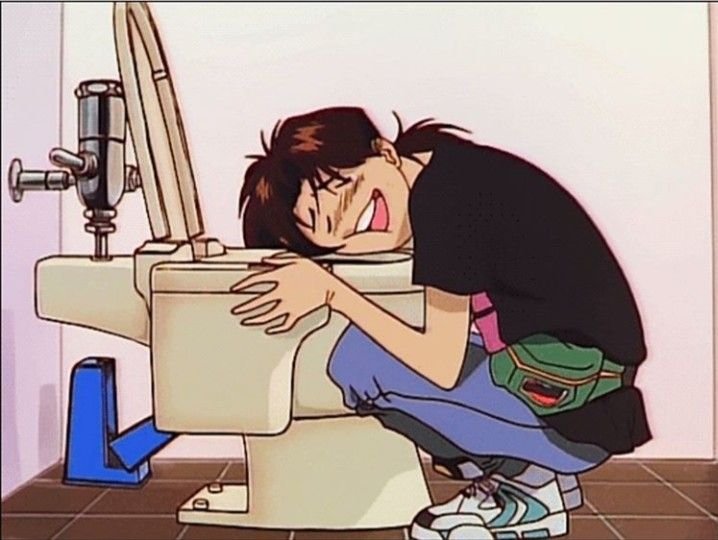
And yes, his obsession with certain bathroom fixtures is something probably best left unexplained.
But beneath all that absurdity is someone who genuinely cares about the people he meets.
Throughout his travels, Kintaro repeatedly encounters women who initially view him as incompetent, foolish, or completely hopeless.
And understandably so.
He rarely makes a good first impression.
But as each episode progresses, something interesting happens.
The people around him begin discovering that he's far more capable than he appears.
He's intelligent, hardworking, adaptable, and often willing to help others without expecting anything in return.
He approaches seemingly insignificant jobs with extraordinary enthusiasm.
And when someone needs assistance, he frequently goes out of his way to provide it.
The contrast is what makes him such an entertaining protagonist.
One moment, Kintaro is behaving like the biggest idiot imaginable.
The next, he's demonstrating remarkable competence or genuine compassion.
It's difficult not to find that endearing.
And perhaps the most charming thing about him is that he rarely stays around to receive recognition.
Once his work is finished, he gets back on his bicycle and continues traveling.
Another town.
Another job.
Another opportunity to learn something.
That simple structure gives Golden Boy an almost wholesome quality beneath its very unwholesome humor.
Why Six Episodes Were Enough
One of Golden Boy's greatest strengths is its length.
At just six episodes, the anime never has the opportunity to exhaust its premise.
Each installment introduces a different environment, a new challenge, and another collection of ridiculous situations.
The structure is familiar, but the circumstances change enough to keep the experience entertaining.
And because the episodes are largely self-contained, the series doesn't need to burden itself with complicated mythology or an enormous overarching storyline.
It's simply Kintaro traveling through Japan, learning about life, and making a complete fool of himself along the way.
There's something refreshing about that simplicity.
Not every anime needs multiple seasons.
Not every protagonist requires a grand destiny.
Sometimes, an entertaining premise and a memorable character are enough.
Interestingly, the anime's sixth episode wasn't directly adapted from the manga.
Instead, the production created an original story involving an animation studio, allowing Kintaro's previous experiences to contribute to a concluding adventure.
It's a fitting way to end the OVA.
The episode celebrates animation itself while bringing the series' central ideas together.
Kintaro has spent his journey learning from different people and occupations.
Now those experiences become useful in an entirely different environment.
And when the episode ends, the audience is left with the sense that Kintaro's journey will continue.
We simply won't be following him anymore.
Golden Boy doesn't need a definitive ending because its premise was always about the journey.
And that's something its manga would eventually struggle to preserve.
The Manga: Where Everything Started Going Wrong
Here's where things become complicated.
Golden Boy's original manga began serialization in Shueisha's Super Jump magazine in 1992 and continued until 1997.
Written and illustrated by Tatsuya Egawa, the series was eventually collected into ten volumes.
The early material established the version of Golden Boy that anime viewers know and love.
Kintaro travels from job to job, encounters eccentric people, finds himself in embarrassing situations, and somehow manages to learn something along the way.
But the manga doesn't remain that kind of story.
As it progresses, its focus shifts away from the short, self-contained adventures that defined the anime.
The narrative becomes increasingly concerned with longer dramatic conflicts, ideological confrontations, complicated relationships, and considerably more explicit sexual material.
One important figure in this transformation is Masamune Kongōji.
Introduced early in the manga's longer storyline, Kongōji becomes a major antagonist whose influence and ideology are explored across numerous chapters.
The story begins incorporating discussions of manipulation, power, and control.
By the seventh collected volume, the manga even features mind-control machinery and an extended exploration of Kintaro's past relationship with a woman named Yoko Morimura.
These aren't exaggerations invented by disappointed readers.
The developments are documented in Shueisha's own published descriptions of the manga.
And by the later volumes, the contrast with the six-episode comedy is extraordinary.
The problem isn't necessarily that Golden Boy attempts to explore more serious subjects.
A comedy can absolutely evolve into something dramatic without losing its identity.
The problem, at least from the perspective of someone who loves the OVA, is that the qualities that made the original premise so enjoyable become increasingly difficult to find.
The simple pleasure of watching Kintaro travel through Japan and encounter new experiences gradually gives way to a much more complicated narrative.
Instead of another hilarious misadventure, readers are frequently confronted with prolonged conflicts and increasingly explicit situations.
It's almost difficult to believe that the cheerful, bicycle-riding idiot from the anime belongs to the same story.
When More Explicit Doesn't Mean More Entertaining
Golden Boy was never a family-friendly series.
Its anime adaptation contains nudity, sexual humor, and enough fanservice to make its intended audience obvious.
But there is an important distinction between its use of sexual comedy and the direction taken by much of the later manga.
In the OVA, Kintaro's sexual obsessions are usually part of the joke.
His imagination runs wild, he embarrasses himself, and the situation eventually returns to the central story.
The humor frequently comes from the contrast between his ridiculous fantasies and the reality surrounding him.
The manga, however, increasingly places explicit sexual relationships and situations at the center of its narrative.
And the more it does so, the further it moves away from the lighthearted comedy that made the anime appealing.
That doesn't automatically make it bad.
Readers who enjoy provocative, unconventional adult manga may appreciate Egawa's willingness to experiment.
But for someone looking for more of the anime's particular combination of ridiculous humor and wholesome character development, the later manga can be a deeply disappointing experience.
It's not simply that the content becomes more graphic.
It's that the story increasingly stops feeling like the Golden Boy those viewers fell in love with.
The Controversy Surrounding the Manga's Ending
The manga's ending only adds to its divisive reputation.
Accounts of Golden Boy's publication history describe a complicated relationship between Tatsuya Egawa and the editorial staff at Super Jump.
According to those accounts, Egawa had intended to conclude the series much earlier, around its third collected volume.
However, the magazine reportedly encouraged him to continue the manga because of its popularity.
Egawa is said to have agreed under the condition that he would have greater creative freedom over its direction.
That freedom reportedly contributed to the increasingly unconventional material found throughout the later volumes.
Eventually, the series came to an abrupt conclusion in 1997.
Retellings of the dispute claim that Egawa was given very little notice to finish the story and was angered by the decision.
There is an important caveat here: while the manga's publication dates and final volume are established, the exact editorial discussions and reasons for its termination are not as independently verifiable. Different retrospective accounts offer explanations, but they shouldn't all be treated as confirmed historical fact.
What isn't particularly difficult to understand is why the conclusion frustrated readers.
After spending so much time developing its longer storylines, the manga ends without the kind of satisfying resolution many readers expected.
Its final chapter is even titled Endless Studying.
Perhaps that's appropriate for a protagonist whose entire existence revolves around learning.
But it doesn't necessarily make the unresolved dramatic material any more satisfying.
And that creates an unfortunate contrast with the OVA.
The anime tells six entertaining stories and leaves its audience wanting more.
The manga spends considerably longer exploring its increasingly complicated narrative, yet leaves many readers wishing it had maintained the simplicity of its beginnings.
Even Golden Boy II Couldn't Recreate the Original Magic
Golden Boy's story didn't end completely in 1997.
More than a decade later, Tatsuya Egawa returned to the character with Golden Boy II, serialized in Shueisha's Business Jump between 2010 and 2011.
The sequel was collected into two volumes.
Once again, Kintaro finds himself changing professions and becoming involved in unusual situations.
However, the sequel also incorporates the entertainment industry, adult-film production, and another confrontation involving Kongōji.
In other words, it doesn't simply return to the self-contained comedy that defined the OVA.
For readers hoping to rediscover the exact feeling of the six animated episodes, Golden Boy II isn't a straightforward continuation of that experience.
And perhaps that illustrates the central difference between the anime adaptation and Egawa's broader vision for the manga.
The OVA celebrates Kintaro as an eccentric traveler whose life is an endless opportunity to learn.
The manga increasingly uses him to explore other interests, conflicts, and ideas.
Those are two different approaches to the same character.
But there's a reason the shorter one remains so memorable.
The Anime Understood What Made Golden Boy Special
It's worth remembering that without Tatsuya Egawa's manga, Golden Boy wouldn't exist.
Kintaro, his philosophy, his ridiculous personality, and the premise of his travels originated with Egawa.
The anime's greatest strengths are built upon those foundations.
So saying that the adaptation is better shouldn't erase the importance of the original creator.
But adaptations can make creative decisions that strengthen their source material.
And that's precisely what Golden Boy demonstrates.
By focusing on the early adventures and creating an original conclusion, the OVA gives viewers a concentrated version of what makes Kintaro entertaining.
There's no need for an enormous ideological conflict.
No need for increasingly complicated romantic drama.
And no need to transform its premise into something unrecognizable.
Just Kintaro.
His bicycle.
His notebook.
And his completely uncontrollable enthusiasm for learning about the world.
The result is an anime that knows exactly what it wants to be.
A ridiculous adult comedy with a surprisingly sincere heart.
And sometimes, that's enough.
Does Golden Boy Still Hold Up in 2026?
Absolutely, provided you know what you're getting into.
Golden Boy is unmistakably a product of the 1990s.
Its exaggerated sexual humor, frequent fanservice, and portrayal of women won't appeal to everyone.
Some jokes have aged less gracefully than others.
And viewers who dislike perverted protagonists will probably find Kintaro insufferable rather than charming.
Those criticisms are entirely fair.
But for audiences who enjoy outrageous adult comedy, the OVA remains extraordinarily entertaining.
The animation is expressive.
The comedic timing is excellent.
The voice acting is unforgettable.
And Kintaro is one of those rare protagonists who can be an absolute embarrassment and still somehow earn your affection.
There's also something strangely inspiring about his philosophy.
He doesn't believe that learning ends when formal education does.
He approaches ordinary experiences with genuine curiosity.
And even when he completely humiliates himself, he rarely loses his enthusiasm for discovering something new.
Perhaps that's the real charm of Golden Boy.
Behind the fanservice and ridiculous jokes, it celebrates the idea that life itself is worth exploring.
Kintaro might be a complete idiot.
But he's an idiot who genuinely loves being alive.
And that makes him surprisingly difficult not to admire.
Six Episodes. Thirty Years. Still Hilarious.
There is something almost frustrating about how short Golden Boy is.
Six episodes.
That's all we received.
And while the manga offers considerably more material, it doesn't necessarily offer more of what made the animated series so enjoyable.
But perhaps the short length is part of the reason the anime has remained so memorable.
It never overstays its welcome.
It never abandons its central identity.
And it ends before its wonderfully ridiculous premise has a chance to become exhausting.
More than three decades after its debut, Kintaro's adventures remain a reminder that comedy doesn't need an elaborate story to be unforgettable.
Sometimes, all it takes is a lovable idiot, a bicycle, and the ability to make an ordinary situation go spectacularly wrong.
Golden Boy's original manga eventually became something far removed from the anime's cheerful wandering adventures.
Some readers appreciate that evolution.
Others consider it a complete betrayal of the series' initial appeal.
But regardless of how you feel about the manga, one thing is difficult to deny.
The six-episode OVA captured something special.
Something funny, ridiculous, surprisingly wholesome, and endlessly entertaining.
And perhaps that's why Golden Boy remains so beloved.
It may be one of the shortest comedy anime you'll ever watch.
But it's also one of the easiest to remember.
Six episodes were enough to make Golden Boy a classic.
And sometimes, knowing when to stop is what makes something golden.