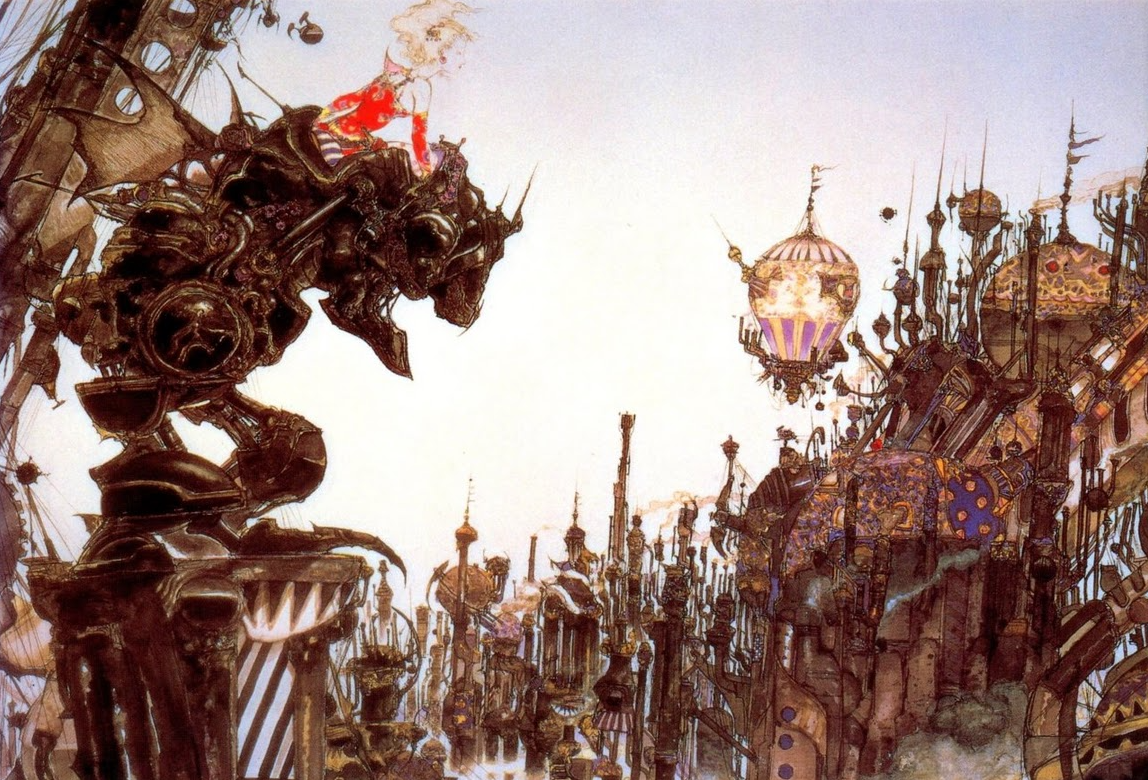
From the emotional storytelling of Final Fantasy IV to the unforgettable journey of Final Fantasy X, these five games represent some of the most important moments in the history of one of gaming's greatest franchises. If you want to understand what makes Final Fantasy special, these are five adventures you shouldn't miss.
What exactly makes a Final Fantasy game?
It's a surprisingly difficult question to answer.
For some people, it's the turn-based combat.
For others, it's the enormous worlds filled with magic, crystals, monsters, and unforgettable characters.
Perhaps it's the music. The extraordinary compositions that can make a fictional landscape feel strangely familiar, or turn a simple conversation into something that stays with you for years.
Or maybe it's the stories.
Stories about people confronting loss, discovering themselves, falling in love, and continuing forward even when the world seems determined to break them.
The remarkable thing about Final Fantasy is that it has never been defined by just one of these qualities.
Since its debut in 1987, the franchise has constantly experimented with its own identity.
Different worlds.
Different characters.
Different approaches to combat.
And occasionally, entirely different ideas about what a role-playing game should be.
Yet beneath all those changes, there's something recognizable connecting its greatest entries.
A particular sense of adventure.
A willingness to embrace emotion without embarrassment.
And the belief that video games can tell stories every bit as memorable as those found in literature or cinema.
Among the many installments released over the decades, five stand out as particularly important examples of what Final Fantasy can accomplish.
Final Fantasy IV, VI, VII, IX, and X.
These aren't necessarily the five objectively greatest games in the franchise. There's no definitive answer to that question, and fans could make compelling arguments for several other entries.
But each of these games represents a crucial part of the series' development.
One helped establish the importance of character-driven storytelling.
Another demonstrated just how emotionally ambitious a 16-bit RPG could become.
One transformed the series into an international phenomenon.
Another celebrated everything that had made the franchise special.
And the last brought Final Fantasy into a new generation while delivering one of its most emotionally unforgettable adventures.
Together, they demonstrate why Final Fantasy became something much greater than just another RPG franchise.
1. Final Fantasy IV (1991): The Game That Made the Characters Matter
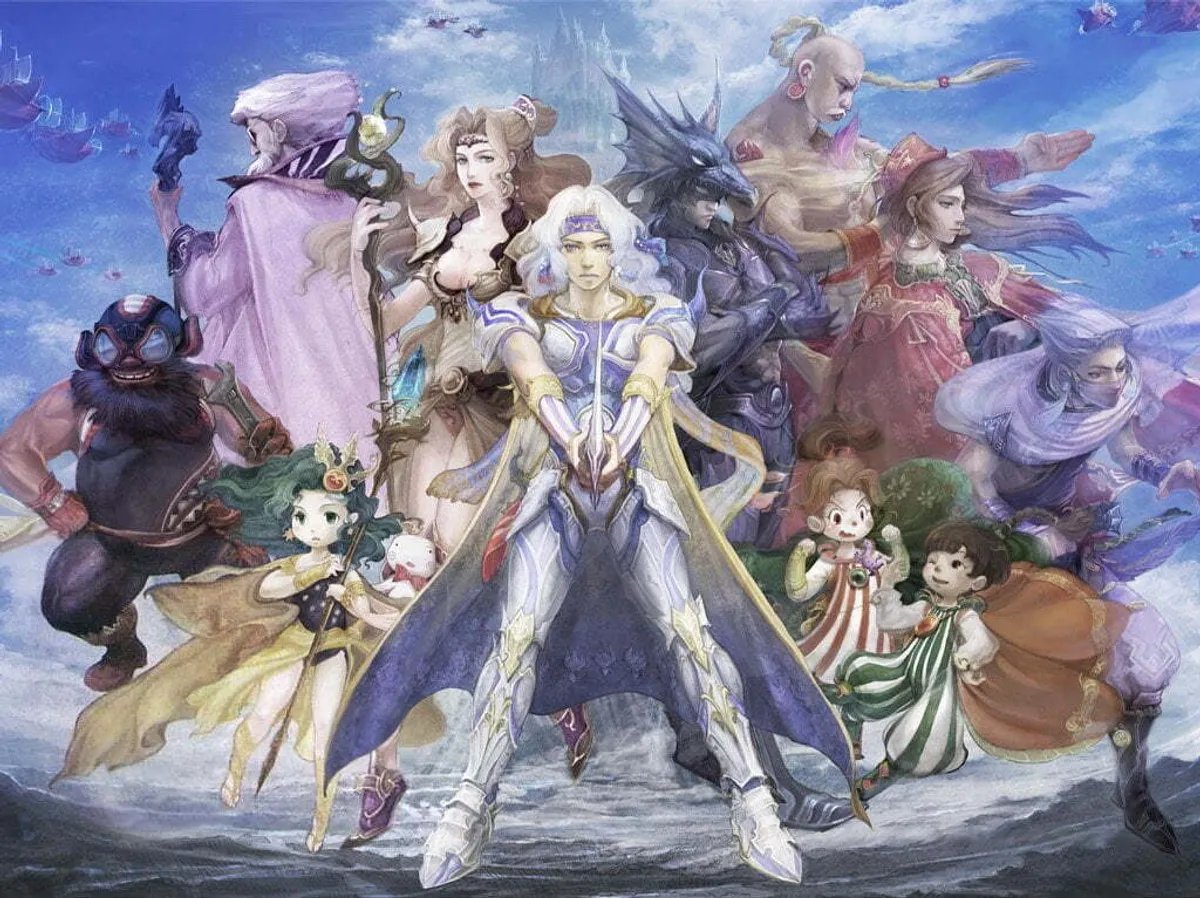
Before Final Fantasy IV, the series had already established many of its defining qualities.
The original Final Fantasy introduced the Warriors of Light, elemental crystals, fantasy adventures, and strategic party-based combat.
Final Fantasy II experimented with a more character-driven story, while Final Fantasy III expanded the series' job system and gameplay possibilities.
But Final Fantasy IV brought these ideas together in a way that would become enormously influential.
Released in Japan on July 19, 1991, it was the first Final Fantasy developed for the Super Famicom, known internationally as the Super Nintendo Entertainment System.
And rather than simply delivering another adventure involving heroes saving the world, it placed a troubled, morally conflicted protagonist at the center of its story.
That protagonist was Cecil Harvey.
A dark knight serving as commander of the Red Wings, the powerful airship fleet belonging to the kingdom of Baron.
Cecil begins the game as a respected soldier, but his loyalty is shaken when he becomes involved in increasingly cruel actions carried out in the name of his king.
He begins questioning the morality of his orders.
The decisions he has made.
And whether he can continue serving a kingdom whose actions he no longer believes are justified.
It's a compelling beginning because Cecil isn't an innocent hero suddenly thrust into an unfamiliar conflict.
He's someone who has already participated in wrongdoing.
Someone who must confront his own responsibility before he can move forward.
And that struggle becomes the emotional foundation of the game.
Redemption Becomes Part of the Gameplay
Perhaps Final Fantasy IV's most memorable achievement is the way it connects Cecil's emotional development to its mechanics.
Cecil begins as a dark knight.
His abilities reflect that identity, emphasizing destructive power and the willingness to sacrifice his own well-being to inflict damage.
But as his story progresses, he undergoes a transformation.
He becomes a paladin.
The change isn't simply cosmetic.
His abilities, equipment, and role in battle change alongside his character.
A man who once wielded darkness becomes someone defined by protection and the desire to make amends for his past.
It's an elegant example of storytelling through gameplay.
The mechanics don't merely accompany Cecil's transformation.
They help communicate it.
In a 2021 anniversary interview, game designer and scenario writer Takashi Tokita explained that Cecil's transition from dark knight to paladin was part of the character's concept from early development.
The team wanted the player to experience a drama involving distinct personalities, relationships, and emotional conflicts.
And that ambition is visible throughout the adventure.
Kain struggles with loyalty, jealousy, and his own weaknesses.
Rosa represents both personal devotion and emotional strength.
Rydia experiences terrible loss and gradually grows into a powerful individual.
Other companions enter and leave the party as the story develops, sometimes making tremendous sacrifices for the people they care about.
Not every dramatic moment has aged perfectly, and some apparent sacrifices are later reversed.
But the intention is clear.
Final Fantasy IV wants you to care about the people traveling alongside you.
Not merely because they're useful in combat.
But because they possess lives, relationships, and emotions of their own.
The Birth of Active Time Battle
Final Fantasy IV also introduced one of the franchise's most influential gameplay innovations.
The Active Time Battle system, commonly known as ATB.
Created by Hiroyuki Ito, ATB changed the rhythm of Final Fantasy combat by allowing battle time to continue moving while players selected commands.
Rather than relying exclusively on traditional alternating turns, characters and enemies acted according to their individual timing.
This gave battles a greater sense of urgency.
Players had to consider not only which abilities to use, but when to use them.
The system would become a defining feature of numerous subsequent Final Fantasy installments.
And its influence extended well beyond this particular game.
Final Fantasy IV also placed characters into fixed combat roles rather than allowing the player to freely assign jobs as in Final Fantasy III.
Cecil is a dark knight, later a paladin.
Rosa is a white mage.
Kain is a dragoon.
Rydia specializes in magic and summoning.
These distinctions reinforce their individual identities, making each character feel mechanically recognizable.
Of course, the system limits customization compared with some other entries.
But that trade-off supports the game's narrative focus.
Why Final Fantasy IV Is Essential
Final Fantasy IV matters because it established a powerful direction for the franchise.
It demonstrated how a traditional fantasy adventure could be driven by recognizable human emotions.
Guilt.
Love.
Jealousy.
Friendship.
Sacrifice.
Redemption.
Its dialogue and pacing can feel dated today, and later games would develop many of these ideas with greater sophistication.
But there's something wonderful about experiencing the game that helped establish this direction.
Final Fantasy IV is where the series began to feel less like an adventure about heroes and more like an adventure about people.
And that difference would shape much of what followed.
2. Final Fantasy VI (1994): The Pinnacle of the 16-Bit Era
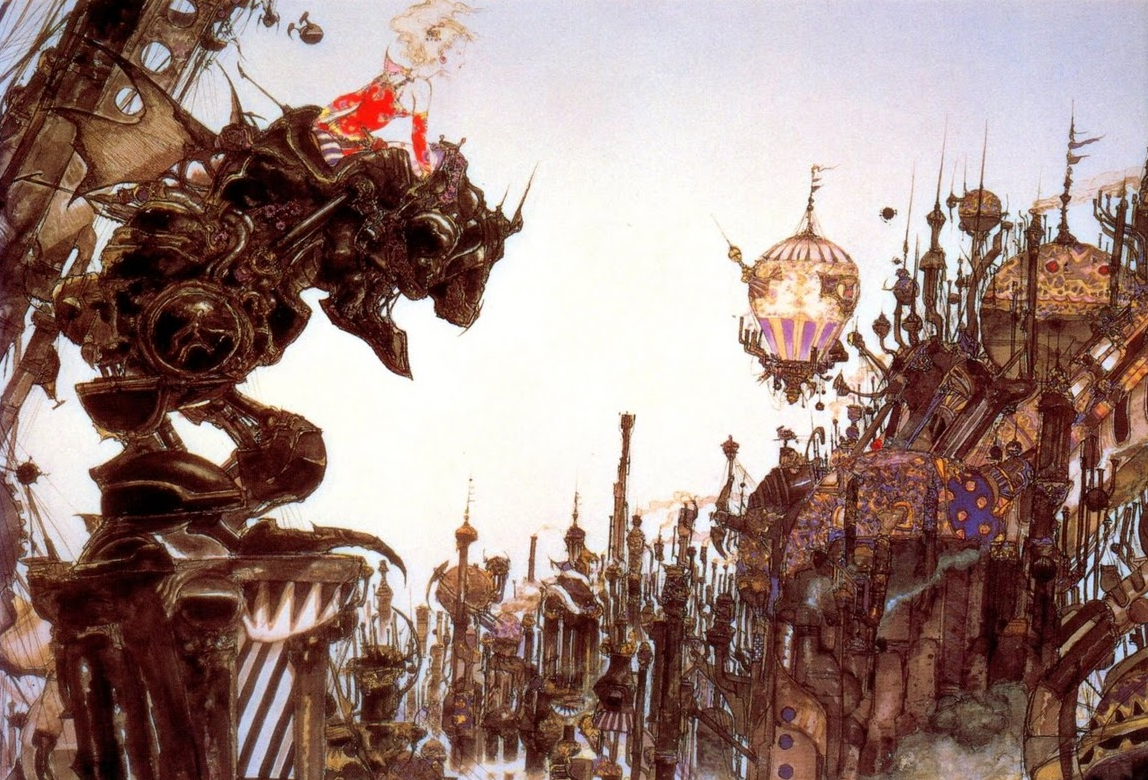
If Final Fantasy IV established the series' capacity for character-driven storytelling, Final Fantasy VI demonstrated just how far that ambition could go.
Released on April 2, 1994, Final Fantasy VI was the final mainline entry developed for the Super Nintendo.
And in many ways, it feels like a celebration of everything the franchise had learned during its early years.
Its world is enormous.
Its cast is extraordinary.
Its music is unforgettable.
And its willingness to explore difficult emotional subjects remains impressive more than three decades later.
But perhaps its most remarkable achievement is its approach to storytelling.
Because unlike many RPGs built around a single dominant protagonist, Final Fantasy VI embraces the idea that nearly everyone in its cast deserves a story of their own.
A Story Where Everyone Matters
Final Fantasy VI begins by introducing Terra Branford, a mysterious young woman with extraordinary magical abilities.
She has been exploited by the Gestahlian Empire, a militaristic power attempting to combine ancient magic with advanced machinery.
After escaping the Empire's control, Terra begins struggling to understand her own identity and place in the world.
It's an excellent premise for a conventional RPG protagonist.
But Final Fantasy VI refuses to remain exclusively Terra's story.
As the adventure progresses, the player encounters an enormous ensemble of characters.
Locke Cole, a treasure hunter burdened by guilt.
Celes Chere, a former imperial general attempting to reconcile her past with the person she wishes to become.
Edgar and Sabin, two brothers whose lives followed dramatically different paths.
Cyan, a warrior struggling with devastating personal loss.
Shadow, a mysterious mercenary haunted by decisions he cannot undo.
And many more.
Altogether, the game features fourteen playable characters, including two optional recruits.
Not every character receives the same amount of development.
But the remarkable thing is how much effort the game puts into making its cast feel like individuals rather than simply a collection of combat abilities.
In a retrospective interview with Game Informer, director Yoshinori Kitase explained that the development team adopted the principle that everyone could be a main character.
That philosophy became central to the game's identity.
And perhaps that's why Final Fantasy VI feels so emotionally rich.
It isn't telling one person's story against the backdrop of an enormous conflict.
It's showing how that conflict affects many different lives.
When a Fantasy Adventure Becomes Something Darker
Final Fantasy VI isn't afraid to explore suffering.
Its characters experience grief, guilt, loneliness, and the fear that everything they've worked toward may have been meaningless.
The game asks what happens when people lose the things that once gave their lives purpose.
And how they might find reasons to continue despite those losses.
This becomes particularly important as the narrative progresses beyond its initial conflict with the Empire.
Without revealing the game's most significant developments, Final Fantasy VI takes a dramatic structural turn that challenges conventional expectations about how a heroic adventure should unfold.
Instead of treating every obstacle as something that can be overcome through determination alone, it acknowledges that some losses cannot simply be undone.
And that's what makes its emotional message so powerful.
Hope isn't meaningful because suffering doesn't exist. Hope becomes meaningful because people continue searching for it despite suffering.
This idea runs through the entire cast.
Some characters struggle to forgive themselves.
Others desperately want to protect the people they love.
Some have lost nearly everything they once considered important.
Yet they continue forward.
Not because their lives have become easy.
But because they gradually discover that something remains worth living for.
It's an extraordinarily ambitious theme for a game originally released in 1994.
And it's one of the reasons Final Fantasy VI continues to resonate.
The Opera Scene and the Power of Video Game Music
Then there's the opera scene.
One of the most celebrated sequences in Final Fantasy history.
During an elaborate theatrical performance, Celes becomes involved in an operatic production that also serves as the setting for a crucial part of the party's plans.
What makes the sequence extraordinary isn't simply its visual presentation.
It's the way music, storytelling, and player interaction become inseparable.
The player participates in the performance, transforming what could have been an ordinary cinematic scene into something uniquely suited to the medium.
In an interview revisiting the game's development, Kitase explained how he collaborated with composer Nobuo Uematsu and artist Hideo Minaba to bring the sequence to life.
The result is something that still feels remarkably theatrical.
And the opera is only one example of the game's musical achievements.
Terra's Theme.
Searching for Friends.
Dancing Mad.
Each contributes to a world whose emotional atmosphere often feels much larger than its limited graphical capabilities should allow.
The hardware couldn't deliver modern cinematic animation.
It couldn't provide extensive voice performances.
But it didn't need to.
The combination of pixel art, music, and carefully directed scenes allowed players to imagine everything beyond the screen.
And sometimes, that imagination makes the emotional experience even more powerful.
Why Final Fantasy VI Is Essential
Final Fantasy VI represents one of the highest achievements of the 16-bit RPG era.
It combines the storytelling ambitions established by earlier installments with an extraordinary ensemble cast, memorable combat abilities, and a soundtrack that remains among the franchise's finest.
But its greatest accomplishment is emotional.
It understands that heroism doesn't always mean being powerful enough to defeat an enemy.
Sometimes, it means finding a reason to continue after life has taken away something irreplaceable.
Final Fantasy VI isn't just a story about saving the world. It's a story about finding something worth saving it for.
And that's what makes it unforgettable.
3. Final Fantasy VII (1997): The Game That Changed Everything
There are important games.
There are influential games.
And then there are games that fundamentally change how an entire genre is perceived.
Final Fantasy VII belongs to that last category.
Released in Japan on January 31, 1997, the game marked one of the most significant turning points in the history of the franchise.
After years of developing Final Fantasy titles for Nintendo hardware, Square brought its seventh mainline entry to Sony's PlayStation.
The transition allowed the development team to take advantage of CD-ROM storage, three-dimensional character models, pre-rendered environments, and elaborate computer-generated cinematics.
For players accustomed to the sprite-based presentation of previous installments, the difference was extraordinary.
Final Fantasy VII didn't merely look like another entry in the series.
It looked like an entirely new generation of role-playing games.
And its impact extended far beyond technology.
Bringing Japanese RPGs to a Worldwide Audience
Before Final Fantasy VII, Japanese RPGs already possessed dedicated audiences outside Japan.
Games like Final Fantasy VI and Chrono Trigger had earned enormous critical respect.
But the genre had not yet achieved the same widespread mainstream popularity in Western markets that it would enjoy later.
Final Fantasy VII helped change that.
Its ambitious presentation, extensive marketing campaign, memorable characters, and cinematic storytelling attracted audiences who might never previously have considered playing a Japanese RPG.
In its retrospective coverage, Ars Technica described Final Fantasy VII as a crucial breakthrough for the genre in the West.
Polygon's extensive oral history similarly documented how Square invested heavily in the game's technology, development, and international marketing.
The success wasn't accidental.
It was the result of an extraordinary creative and commercial effort.
But technical ambition and advertising alone wouldn't have been enough to make the game endure.
Final Fantasy VII also had to deliver an experience worth remembering.
And it did.
Cloud Strife and the Fragility of Identity
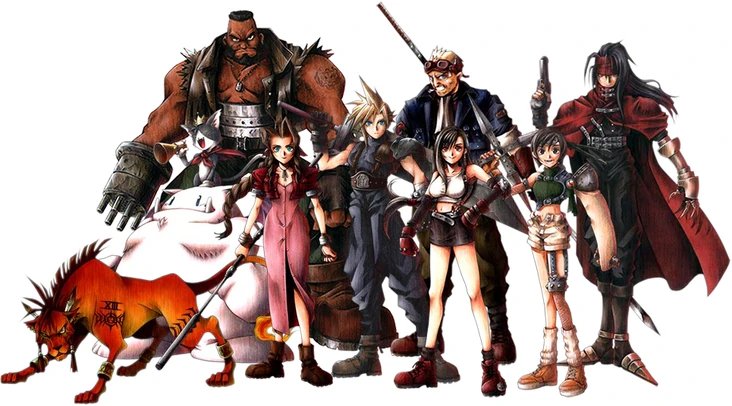
At the center of Final Fantasy VII is Cloud Strife.
A seemingly cold, confident mercenary who claims to have once belonged to SOLDIER, the elite military organization operated by the Shinra Electric Power Company.
At first, Cloud appears to fit the familiar image of a capable RPG protagonist.
He's skilled.
He's powerful.
He carries an enormous sword.
And he seems largely uninterested in the personal concerns of the people around him.
But as the story progresses, that image becomes increasingly complicated.
Cloud's identity, memories, and understanding of his past become central to the narrative.
Without spoiling its most important revelations, Final Fantasy VII explores the uncomfortable possibility that the person we believe ourselves to be might not entirely reflect who we actually are.
Cloud isn't simply a heroic warrior attempting to save the planet.
He's someone struggling to understand himself.
And that makes his journey far more compelling than his appearance initially suggests.
The surrounding cast is equally important.
Tifa provides an emotional connection to Cloud's past.
Aerith brings warmth, optimism, and an understanding of the planet's spiritual significance.
Barret's anger toward Shinra is shaped by personal loss and his responsibility toward his daughter.
Even the seemingly larger-than-life antagonist Sephiroth becomes part of a story deeply concerned with identity, memory, and the consequences of humanity's ambition.
These are characters whose popularity has endured for decades.
Not simply because they look memorable.
But because their stories left a lasting impression.
An Environmental Story That Still Feels Relevant
Final Fantasy VII also distinguished itself through its setting.
Rather than returning to a conventional medieval fantasy world, it introduced players to the industrial metropolis of Midgar.
A city dominated by Shinra, a corporation extracting Mako energy from the planet to support an increasingly powerful technological civilization.
The imagery is unforgettable.
Enormous reactors.
Crowded slums.
Wealthy districts towering above poorer communities.
And a society whose comfort depends upon consuming the world's natural resources.
The conflict between industrial progress and environmental destruction gives Final Fantasy VII a distinctive identity.
But the story doesn't reduce every moral question to a straightforward answer.
Its characters sometimes employ dangerous methods to oppose Shinra.
The consequences of their actions affect ordinary people.
And their personal motivations aren't always as simple as heroic idealism.
That moral complexity helps the world feel believable despite its fantastical elements.
Final Fantasy VII is interested in what happens when progress becomes inseparable from exploitation.
And when individuals begin questioning systems that everyone else has learned to accept.
The Materia System and Freedom to Experiment
Beneath its cinematic presentation, Final Fantasy VII remains a deeply engaging role-playing game.
Its Materia system allows players to customize characters by equipping magical orbs that grant spells, abilities, summons, and other effects.
Combining different Materia creates opportunities for experimentation.
Characters aren't permanently confined to traditional jobs.
Instead, players can develop parties around different strategies and preferences.
The system strikes an appealing balance between accessibility and depth.
And that flexibility helped make the game enjoyable even for players encountering the series for the first time.
Why Final Fantasy VII Is Essential
Final Fantasy VII is arguably the single most historically influential game on this list.
It demonstrated that Japanese RPGs could become international blockbuster releases.
It pushed the franchise toward cinematic presentation while maintaining its strategic combat and emotional storytelling.
And it introduced a world and cast so memorable that they continue supporting new games and reinterpretations decades later.
The original's blocky character models, uneven translation, and occasional pacing issues certainly show their age.
But those limitations don't erase its achievement.
And while the modern remake project offers a spectacular reinterpretation, it shouldn't be mistaken for a direct replacement for the complete 1997 game.
The original remains a distinct experience.
Final Fantasy VII matters because it showed a much wider audience what a Japanese RPG could be.
And gaming was never quite the same afterward.
4. Final Fantasy IX (2000): A Love Letter to Everything Final Fantasy
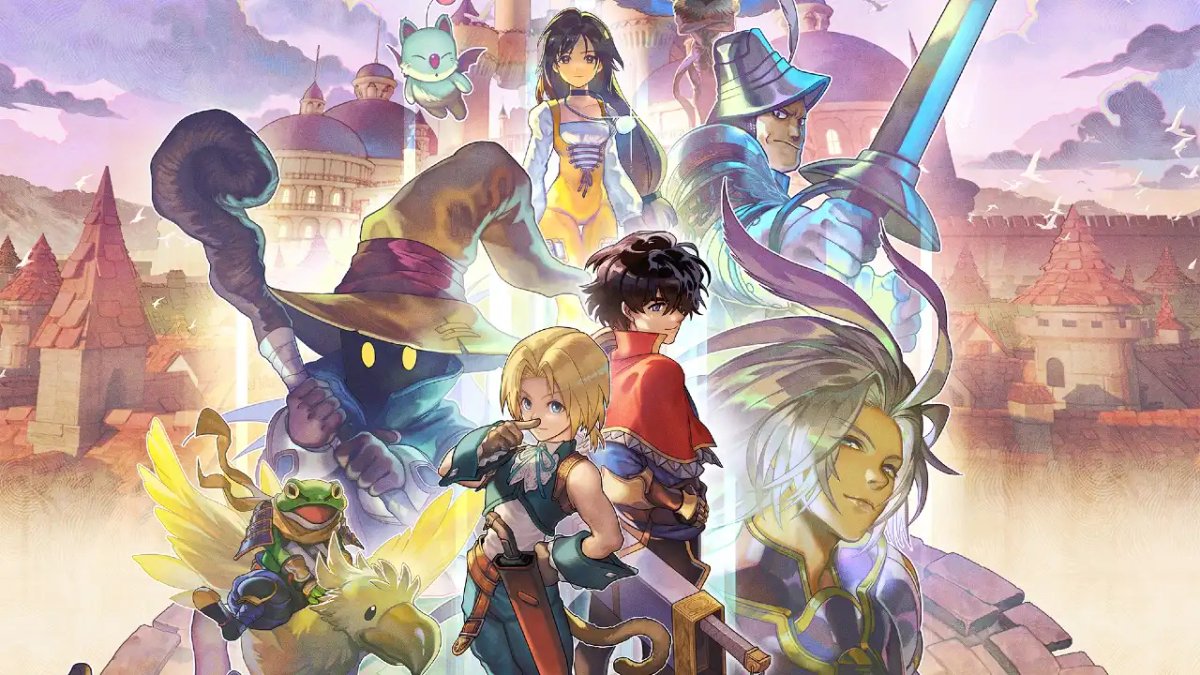
After Final Fantasy VII and VIII introduced increasingly modern, science-fiction-inspired worlds, the next installment took a seemingly unexpected direction.
Final Fantasy IX returned to fantasy.
Castles.
Knights.
Black mages.
Airships.
Magical kingdoms.
A world filled with strange creatures and the atmosphere of a traditional fairy tale.
But calling Final Fantasy IX a simple return to the past would be misleading.
Because beneath its charming appearance lies one of the franchise's most thoughtful explorations of life, death, identity, and the meaning of existence.
Released in Japan on July 7, 2000, Final Fantasy IX was the last numbered installment originally developed for the first PlayStation.
And in many ways, it feels like a farewell to an entire era of Final Fantasy.
Returning to the Series' Roots
Final Fantasy IX was deliberately developed around the idea of returning to the franchise's roots.
In Square Enix's twentieth-anniversary interviews, event designer Kazuhiko Aoki confirmed that this direction was present from early development.
The creative team wanted to embrace the medieval fantasy atmosphere that had defined many earlier entries.
But director Hiroyuki Ito also explained that the meaning of returning to the roots wasn't entirely fixed.
It wasn't necessarily about reproducing Final Fantasy I.
It was about rediscovering the feelings, ideas, and creative spirit associated with the franchise's beginnings.
And that's precisely what Final Fantasy IX accomplishes.
Its world feels whimsical and inviting.
Its characters have recognizable fantasy identities.
Its locations feel like places from an illustrated storybook.
And its plot begins with a wonderfully theatrical premise involving a kidnapping, a princess, and a traveling troupe of performers.
At first, it seems like a lighthearted adventure.
But that impression gradually changes.
Vivi and the Question of What It Means to Live
Perhaps no character better represents the emotional brilliance of Final Fantasy IX than Vivi Ornitier.
A small black mage with a pointed hat and glowing yellow eyes.
Vivi looks almost like a mascot for the series' earliest fantasy traditions.
He's shy, gentle, curious, and occasionally frightened by a world he doesn't fully understand.
But beneath that charming appearance lies one of the most profoundly human stories in the franchise.
Vivi struggles with questions about his identity.
His origins.
His purpose.
And what it means to exist in a world where life is temporary.
The remarkable thing about his character is that his questions aren't merely relevant to his fictional circumstances.
They're questions nearly everyone must eventually confront.
Why are we here?
What makes our lives meaningful?
What happens when we lose the people we care about?
And if our time is limited, how should we spend it?
Final Fantasy IX approaches these questions with extraordinary sensitivity.
Its colorful visuals and whimsical characters provide a contrast to the seriousness of its themes.
And perhaps that's precisely why the emotional moments work so well.
The game invites players into a world that feels innocent and fantastical.
Then gradually reveals that even in such a world, existence can be frightening, confusing, and painfully temporary.
Final Fantasy IX looks like a fairy tale, but it understands the sadness of being alive.
And that's what makes it so beautiful.
Zidane: A Different Kind of Final Fantasy Protagonist
Zidane Tribal is another reason the game stands apart.
Unlike Cloud Strife's initially distant personality or Squall Leonhart's emotional withdrawal, Zidane begins as a relatively cheerful and outgoing protagonist.
He's playful.
Confident.
Occasionally inappropriate.
And usually eager to help the people around him.
He doesn't need to learn the value of friendship from nothing.
Instead, much of his strength comes from the connections he's already willing to form.
He frequently encourages his companions and reminds them that they don't need to face their struggles alone.
But Zidane also has uncertainties of his own.
And as the story progresses, he discovers that helping others is considerably easier than confronting certain truths about himself.
That gives his character an appealing emotional balance.
He isn't simply a flawless source of encouragement.
He's another person searching for somewhere he belongs.
And that idea becomes central to the entire adventure.
A Story About Finding Somewhere to Belong
Nearly every major character in Final Fantasy IX struggles with questions about identity and belonging.
Princess Garnet must reconcile her personal desires with her responsibilities.
Steiner struggles to balance loyalty with his developing understanding of right and wrong.
Freya carries the pain of loss and separation.
Vivi desperately wants to understand the meaning of his existence.
And Zidane must eventually confront questions about his own origins.
These characters are different in almost every imaginable way.
Yet they gradually become a family.
Not because they're related.
Not because they share the same background.
But because their experiences bring them together.
And there's something extraordinarily comforting about that.
The game suggests that belonging isn't necessarily something we're born into.
Sometimes, it's something we create through the relationships we build.
Why Final Fantasy IX Is Essential
Final Fantasy IX is one of the greatest celebrations of the franchise's identity.
It brings back classic jobs, recognizable fantasy creatures, traditional magical abilities, and countless references to earlier adventures.
Its equipment-based ability system gives characters distinct roles while allowing players to develop their skills.
And Nobuo Uematsu's extraordinary soundtrack captures the wonder, melancholy, and warmth of its world.
Its battle pacing can feel slow today, particularly compared with later releases.
But the adventure itself remains remarkable.
Because Final Fantasy IX demonstrates that returning to familiar ideas doesn't necessarily mean abandoning creativity.
Sometimes, revisiting the past allows us to better understand what made something special in the first place.
Final Fantasy IX is a love letter to the franchise's history, wrapped inside a beautiful story about finding meaning in the time we're given.
And that's why it deserves to be experienced.
5. Final Fantasy X (2001): The Emotional Masterpiece That Defined a New Generation
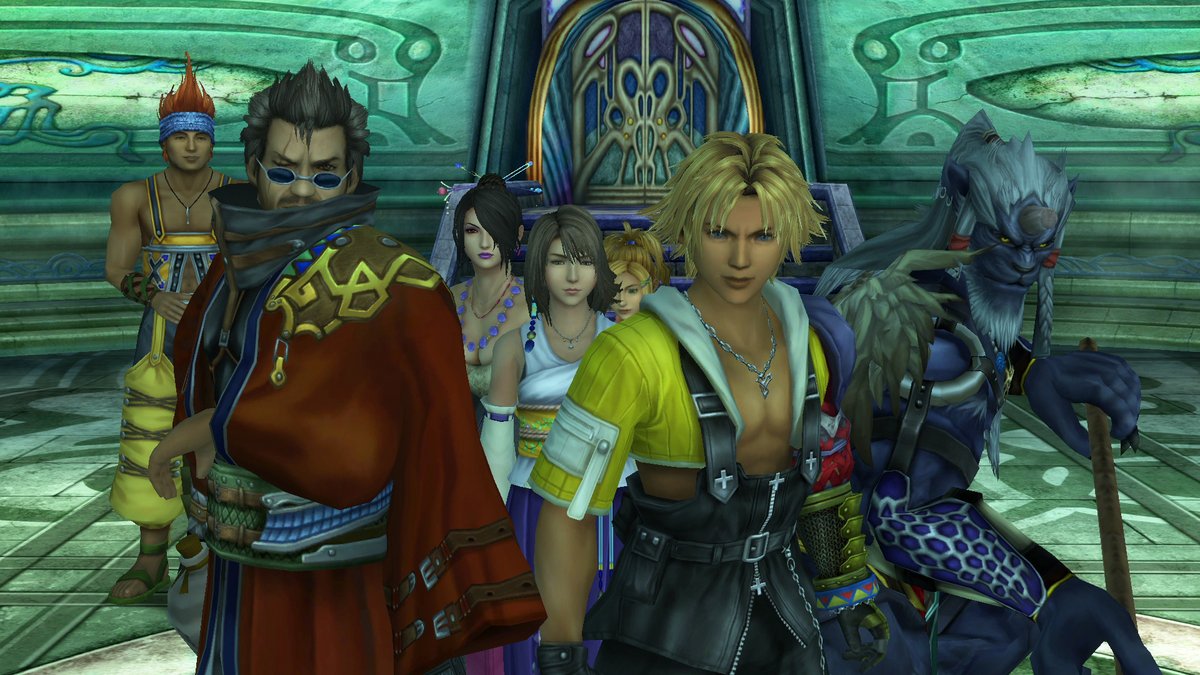
If Final Fantasy IX represented a farewell to the franchise's past, Final Fantasy X represented the beginning of a new future.
Released in Japan on July 19, 2001, it was the first mainline Final Fantasy developed for the PlayStation 2.
And the technological leap was immediately apparent.
Detailed three-dimensional environments.
More expressive character models.
Elaborate cinematic sequences.
And, for the first time in a numbered Final Fantasy game, voice acting.
But Final Fantasy X's greatest achievement wasn't simply making the franchise look more modern.
It was using that technology to create one of the most emotionally memorable stories in the series.
A story about love, sacrifice, faith, and the courage to challenge a world that has accepted suffering as inevitable.
Welcome to Spira
Final Fantasy X begins by introducing Tidus.
A famous blitzball player from the technologically advanced city of Zanarkand.
He's confident, energetic, and accustomed to a life of celebrity.
But when a mysterious monster called Sin attacks his city, Tidus finds himself transported to an unfamiliar world called Spira.
It's a place shaped by fear.
Sin repeatedly brings devastation to its inhabitants, destroying communities and leaving generations to live beneath the threat of another attack.
Spira's religious institutions teach that humanity must atone for its sins.
And at the center of its traditions is the pilgrimage undertaken by summoners.
One of those summoners is Yuna.
A gentle, determined young woman who has dedicated herself to following in her father's footsteps and bringing peace to the world.
When Tidus joins her journey, he initially struggles to understand Spira's customs.
Its religious beliefs.
Its acceptance of suffering.
And the enormous responsibilities placed upon someone so young.
But through his experiences with Yuna and her guardians, Tidus begins recognizing the deeper contradictions within this society.
And that's where Final Fantasy X becomes something extraordinary.
Yuna and the Beauty of a Selfless Dream
Yuna is one of the most compelling characters in Final Fantasy.
She isn't particularly loud.
She doesn't constantly boast about her abilities.
And she rarely demands that others recognize the importance of her mission.
Instead, she carries her responsibilities with quiet determination.
She smiles when the people around her need reassurance.
She comforts those who have suffered.
And she continues pursuing a goal whose personal consequences are far more serious than they initially appear.
There's something heartbreaking about the way Yuna treats her own happiness as secondary to everyone else's.
She wants to protect people.
She wants to give them hope.
And she believes her responsibility is to accept the sacrifices necessary to accomplish that.
But as Tidus begins understanding what her journey entails, he challenges assumptions that others have accepted for generations.
Why must peace come at such a terrible cost?
Why should people accept a cycle of suffering simply because tradition tells them there's no alternative?
And why should someone as kind as Yuna be denied the opportunity to live for herself?
These questions form the emotional foundation of the story.
Final Fantasy X isn't simply about defeating a monster. It's about questioning a world that has mistaken sacrifice for the only possible form of salvation.
And that makes the journey extraordinarily powerful.
Tidus and Yuna: A Love Story Built Around an Impossible Future
At the heart of Final Fantasy X is the relationship between Tidus and Yuna.
Their personalities initially contrast with one another.
Tidus is impulsive, expressive, and sometimes openly frustrated by the customs of the world around him.
Yuna is composed, thoughtful, and determined to fulfill her responsibilities.
But as they travel together, they begin changing one another.
Tidus gradually becomes more considerate and mature.
Yuna begins discovering that her own happiness matters.
And their relationship develops through shared experiences rather than simply existing as a predetermined romance.
What makes it so emotionally effective is the uncertainty surrounding their future.
The closer they become, the more painful the reality of Yuna's pilgrimage appears.
They want to enjoy the time they have together.
But their responsibilities and circumstances threaten the possibility of an ordinary future.
There's a particular sadness in watching two people discover something beautiful while knowing that the world may never allow them to keep it.
And Final Fantasy X understands that feeling extraordinarily well.
The relationship isn't merely an optional romantic subplot.
It's inseparable from the game's broader examination of duty, sacrifice, and the importance of choosing how to live.
A New Kind of Turn-Based Combat
Final Fantasy X also introduced significant mechanical changes.
Rather than continuing with the Active Time Battle system used in several previous entries, it adopted Conditional Turn-Based Battle, commonly known as CTB.
This system allows players to carefully consider their actions without the constant pressure of advancing action gauges.
Turn order becomes visible, making it easier to understand how different commands will influence upcoming actions.
Players can also switch active party members during battles, encouraging strategic use of the entire team.
And then there's the Sphere Grid.
Instead of relying exclusively on conventional experience-based leveling, characters develop by traveling across an interconnected board of abilities and stat improvements.
Each character initially follows a path associated with their intended role, but players can eventually expand beyond those specializations.
The system is both approachable and surprisingly flexible.
And it remains one of the most memorable progression systems in the franchise.
The Music That Makes Everything Hurt
Final Fantasy X's soundtrack is another extraordinary achievement.
Unlike previous mainline entries composed solely by Nobuo Uematsu, Final Fantasy X's music was created by Uematsu alongside Masashi Hamauzu and Junya Nakano.
The result is a distinctive combination of musical styles that perfectly complements Spira's atmosphere.
There's the energetic excitement of blitzball.
The peaceful beauty of its tropical villages.
The solemn atmosphere surrounding its religious traditions.
And the melancholy that seems to accompany Yuna's journey everywhere she goes.
Perhaps the most recognizable piece is To Zanarkand.
A gentle piano composition that captures the entire emotional identity of the game.
It's a melody filled with longing.
With memory.
With the sadness of something precious that may already be slipping away.
And when it accompanies the game's most emotional moments, the effect is unforgettable.
Why Final Fantasy X Is Essential
Final Fantasy X demonstrated that the franchise could embrace new technology without abandoning the emotional storytelling that had made earlier entries special.
Its voice acting and more linear progression represented substantial changes.
Some performances can sound awkward by modern standards, and its approach to exploration won't appeal equally to every player.
But those limitations do little to diminish the experience.
Because Final Fantasy X is, above all, an extraordinary story about people refusing to accept that suffering must continue forever.
It's about finding the courage to question traditions.
Recognizing that love can change the way we understand the world.
And deciding that even when the future seems impossible, it's still worth fighting for.
Final Fantasy X proved that the next generation of Final Fantasy could be different without losing its heart.
And more than twenty-five years later, its story remains one of the franchise's greatest achievements.
Five Games, Five Different Reasons to Love Final Fantasy
Looking back at these five games, something fascinating becomes apparent.
They're all unmistakably Final Fantasy.
Yet each expresses the franchise's identity in a completely different way.
Final Fantasy IV explores redemption through a troubled hero whose personal transformation becomes part of the gameplay.
Final Fantasy VI embraces a vast ensemble cast and demonstrates how hope can remain meaningful even after extraordinary loss.
Final Fantasy VII combines technological ambition with an unforgettable story about identity, memory, and humanity's relationship with the planet.
Final Fantasy IX returns to the series' fantasy roots while exploring the deeply human fear of mortality and the desire to belong somewhere.
And Final Fantasy X brings cinematic storytelling into a new generation with an emotional journey about love, sacrifice, and challenging the inevitability of suffering.
Each represents a different moment in the franchise's development.
And together, they reveal something essential about Final Fantasy.
The series has never needed to remain the same to remain recognizable.
Its greatest strength is its ability to change while preserving the sense of adventure and emotional sincerity that connects its stories.
That's also why limiting the entire franchise to a single definition seems almost impossible.
Some people love Final Fantasy because of its strategic combat.
Others prefer its traditional fantasy settings.
Some are fascinated by its futuristic worlds.
And others remember it primarily because of the characters who made them laugh, cry, or feel something they hadn't expected from a video game.
All of those experiences belong to Final Fantasy.
And perhaps that's what makes the franchise so remarkable.
What About the Other Final Fantasy Games?
Of course, choosing only five games means leaving out several excellent entries.
Final Fantasy V remains one of the franchise's most enjoyable examples of character customization, thanks to its exceptionally flexible job system.
Final Fantasy VIII delivers a distinctive combination of romance, science fiction, and psychological storytelling.
Final Fantasy XII explores political conflict, worldbuilding, and a dramatically different approach to party-based combat.
And the series' more recent installments have continued experimenting with action-oriented gameplay, online worlds, and increasingly ambitious presentation.
Even the original three games deserve recognition for establishing the foundation upon which everything else was built.
So this isn't an argument that IV, VI, VII, IX, and X are the only Final Fantasy games worth playing.
Far from it.
But if someone wanted five adventures that demonstrate the series' historical development, creative ambition, and emotional range, these would be an excellent place to begin.
And because the mainline games generally feature independent worlds and stories, newcomers don't have to play them in numerical order.
You can begin with whichever adventure interests you most.
Why These Five Games Still Matter in 2026
Modern video games have advanced enormously since these titles were released.
Their worlds are bigger.
Their animation is more sophisticated.
Their characters can deliver elaborate performances using modern motion-capture technology.
And their presentation can achieve levels of visual realism that would have seemed impossible during the 1990s.
But technology isn't the only thing that determines whether a game remains worth experiencing.
A beautiful story doesn't become meaningless because its characters are made of pixels.
An extraordinary piece of music doesn't become less moving because it was originally produced through older sound hardware.
And a memorable character doesn't stop being compelling simply because their dialogue appeared in a text box instead of being spoken aloud.
There are plenty of modern games with more advanced graphics than Final Fantasy VI.
But that doesn't automatically make their stories more meaningful.
There are games with far more elaborate cinematic sequences than Final Fantasy VII.
But that doesn't erase the impact Cloud's journey had upon an entire generation of players.
And while modern RPGs have become increasingly sophisticated, there's still something extraordinary about the emotional sincerity of Final Fantasy IX and X.
These games remind us that technological limitations don't necessarily prevent artistic greatness.
Sometimes, creativity flourishes because developers must find imaginative ways to work within those limitations.
And sometimes, the experiences that stay with us longest are surprisingly simple.
A journey across an unfamiliar world.
A conversation between two companions.
A musical theme that returns at exactly the right moment.
Or a character finally finding the strength to confront something they've spent their entire life avoiding.
The greatest Final Fantasy games don't merely entertain us while we're playing them. They give us something to remember afterward.
And these five certainly do.
The Magic of Final Fantasy
Perhaps the greatest thing about Final Fantasy is that every new adventure offers the possibility of discovering something unforgettable.
A world you've never visited.
A character you didn't expect to care about.
A story that begins with a familiar fantasy premise and gradually becomes something profoundly personal.
That's the magic that connects these five games.
Final Fantasy IV taught the series how to embrace dramatic character-driven storytelling.
Final Fantasy VI demonstrated the emotional ambition possible within the 16-bit era.
Final Fantasy VII transformed that ambition into an international phenomenon.
Final Fantasy IX reminded everyone what made the franchise special in the first place.
And Final Fantasy X proved that the series could enter a new generation without sacrificing its emotional identity.
They're different adventures.
Different worlds.
Different experiences.
But each represents something extraordinary about what video games can accomplish.
And while the franchise will undoubtedly continue changing, these games remain essential parts of its history.
Not merely because they were influential.
Not merely because they're remembered fondly.
But because they're still worth playing.
If you want to understand why Final Fantasy means so much to so many people, play IV, VI, VII, IX, and X.
Not because someone told you they're the greatest.
But because each one has something special to show you.
And somewhere along those five journeys, you might just discover what makes Final Fantasy special to you.