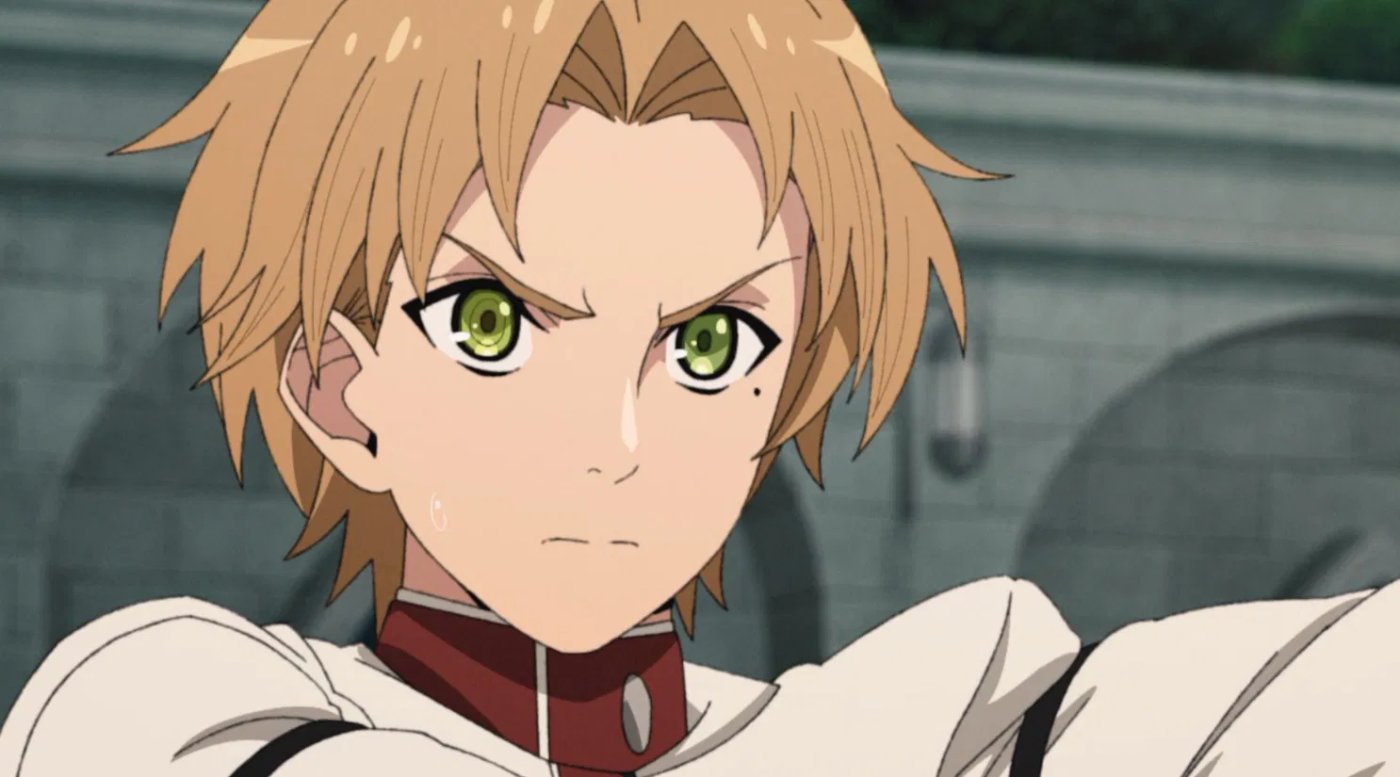
What if the protagonist of a fantasy story wasn't the legendary hero destined to save the world, but the person whose life made that hero possible? Mushoku Tensei's third season reveals something extraordinary about Rudeus Greyrat, fundamentally changing how we understand his journey.
In most fantasy stories, we follow the hero.
The chosen one.
The person destined to defeat an ancient evil, overcome impossible odds, and ultimately save the world.
We watch them grow from an inexperienced nobody into someone capable of accomplishing extraordinary things.
And when the final battle arrives, we know exactly whose story we've been following.
But what if we weren't following that person?
What if the protagonist we've spent years watching was never meant to be the hero who delivers the final blow?
What if his greatest contribution to the world wasn't something he would accomplish himself, but something that would become possible because he existed?
That is the fascinating idea emerging from Mushoku Tensei: Jobless Reincarnation.
With the conclusion of Season 3's first cour in September 2026, the story reveals that Rudeus Greyrat's importance may extend far beyond his own lifetime.
According to the Man-God, Hitogami, Rudeus's descendants are connected to a future in which the Dragon God Orsted finally defeats him.
And suddenly, everything takes on a different meaning.
The relationships Rudeus formed. The family he built. The seemingly ordinary decisions that shaped his second life.
All of them may have consequences far greater than he ever imagined.
Rudeus might not be the hero who saves the world. He might be the reason that hero gets to exist.
And there is something profoundly beautiful about that.
Mushoku Tensei Was Never Really About Saving the World
To understand why this revelation is so meaningful, we need to remember how Mushoku Tensei began.
Rudeus wasn't introduced as a legendary warrior or a chosen hero.
He was a 34-year-old Japanese shut-in who had spent years isolating himself from society.
His previous life was dominated by regret, avoidance, unhealthy behavior, and opportunities he had allowed to slip away.
After dying in a traffic accident while attempting to save others, he finds himself reincarnated in a fantasy world.
For the first time in years, he has another opportunity to live.
And he decides that this time, he won't waste it.
That's the central premise of Mushoku Tensei.
Not becoming the strongest person in the world.
Not defeating an evil god.
Not fulfilling an ancient prophecy.
Simply living a life he won't regret.
Of course, Rudeus possesses extraordinary magical potential.
He becomes an exceptionally talented magician, travels across continents, encounters powerful individuals, and experiences events that dramatically influence the world around him.
But those accomplishments were never the fundamental reason for his reincarnation.
His real objective has always been much more personal.
He wants to build relationships.
He wants to protect the people he loves.
He wants to experience the things he denied himself in his previous life.
And perhaps most importantly, he wants to become someone capable of facing life's difficulties rather than running away from them.
He doesn't always succeed.
Rudeus makes serious mistakes. Some of his behavior is difficult to defend, and the story doesn't erase those flaws simply because he receives another chance.
But his life gradually becomes something completely different from the existence he once endured.
He makes friends.
He falls in love.
He becomes a husband.
Eventually, he becomes a father.
And without realizing it, the ordinary happiness he's been pursuing begins connecting him to something much larger.
The Revelation That Changes Everything
Season 3's first cour delivers one of Mushoku Tensei's most important revelations.
After the horrifying events surrounding Turning Point 4 and the arrival of his future self, Rudeus discovers just how dangerous the Man-God truly is.
For much of the series, Hitogami has presented himself as a mysterious but occasionally helpful adviser.
His guidance has influenced Rudeus's decisions, sometimes leading him toward unexpectedly beneficial outcomes.
But the diary left behind by an older Rudeus reveals what happens when that apparent kindness turns into calculated betrayal.
In the disastrous future described within the diary, Roxy dies, setting off a chain of tragedies that destroys much of the life Rudeus had built.
His future self becomes consumed by grief, isolation, and revenge.
Despite gaining extraordinary power and knowledge, he cannot recover the happiness he lost.
Yet his desperate journey back through time gives the younger Rudeus an opportunity to prevent that future.
And when Hitogami subsequently confronts him, the reason behind his manipulation begins to emerge.
The Man-God fears Orsted.
But more importantly, he fears a future in which Orsted receives assistance from Rudeus's descendants.
According to Hitogami, those descendants could become instrumental in his eventual defeat.
Roxy's unborn child is especially significant to his plans.
This is why his attempt to destroy Rudeus's family wasn't simply an act of random cruelty.
He was trying to prevent a future that threatened his existence.
Of course, Hitogami has already demonstrated that he cannot be trusted. His account of the future shouldn't automatically be accepted as guaranteed truth.
Nevertheless, the implication is enormous.
Rudeus has become important to the fate of the world not merely because of what he can do, but because of the people who may come after him.
The person threatening Hitogami's future might not be Rudeus himself.
It might be someone whose existence depends upon the life Rudeus has spent building.
He Was Building a Family, Not an Army
Here's what makes this revelation so extraordinary.
Rudeus never began his second life intending to create a bloodline of heroes.
When he reunited with Sylphiette, he wasn't considering the possibility that their future family might influence the fate of the world.
When he married Roxy, he wasn't attempting to produce someone capable of challenging a god.
And when he began building a home, he wasn't secretly preparing the foundations of a legendary dynasty.
He was simply trying to be happy.
That's what makes the connection between his personal life and the world's future so meaningful.
The story takes something fundamentally ordinary, the decision to build a family and gives it extraordinary consequences.
Rudeus's children aren't merely an extension of his ambitions.
They are people who will eventually have their own dreams, relationships, struggles, and decisions to make.
Their lives will be shaped by their parents, but they won't simply be copies of them.
And the future they inherit will depend upon far more than Rudeus alone.
Roxy, Sylphiette, and the other people who influence the Greyrat family have their own agency and contributions.
The future cannot be reduced to one man's accomplishment.
But Rudeus's journey creates the circumstances in which those future possibilities can exist.
And isn't that a fascinating way to tell a fantasy story?
Most protagonists become important because they're destined for greatness.
Rudeus may become important because he helps create a future in which someone else can achieve it.
Imagine Naruto Told From Jiraiya's Perspective
Perhaps the easiest way to understand why this storytelling approach feels so different is to compare Mushoku Tensei with Naruto.
Not Naruto himself.
But Jiraiya.
In Masashi Kishimoto's story, Jiraiya is a legendary shinobi who spends much of his life searching for meaning, experiencing failure, and trying to understand his responsibilities.
He becomes one of the Legendary Sannin.
He trains extraordinary students, including Minato Namikaze, Nagato, and eventually Naruto Uzumaki.
He also receives a prophecy suggesting that one of his pupils will bring tremendous change to the shinobi world.
But Jiraiya himself isn't the person destined to fulfill that prophecy.
His importance lies partly in the people he teaches and the ideals he passes on.
And throughout his life, he doesn't always know whether his decisions are leading the world toward peace or disaster.
He makes mistakes.
He fails to save people.
He loses friends.
He witnesses the consequences of choices he cannot undo.
Yet despite those failures, his influence continues through the people whose lives he has touched.
Now imagine something.
What if Naruto had never been the protagonist of Naruto?
What if the entire story had followed Jiraiya instead?
Imagine beginning with his childhood.
Watching him become a shinobi.
Following his adventures, friendships, failures, and relationships.
Watching him train students without knowing exactly what they would become.
And then, after years of following his personal journey, discovering that one of those students would eventually become the person destined to change the world.
Suddenly, the story would feel completely different.
The focus wouldn't be on watching the chosen hero fulfill his destiny.
It would be on watching the person whose life helped make that destiny possible.
That's the fascinating perspective Mushoku Tensei offers.
There are differences, of course.
Jiraiya is Naruto's mentor, while Rudeus's connection to the possible future hero is familial.
And Naruto's story directly establishes the significance of Jiraiya's legacy, whereas Mushoku Tensei's anime has so far only revealed a threatened future described by Hitogami.
But the underlying idea is remarkably similar.
The most important thing a person accomplishes may be something that happens through the people they leave behind.
Jiraiya's Legacy Makes the Comparison Even More Beautiful
One of Jiraiya's most memorable qualities is how imperfect his life becomes when viewed through his own eyes.
Despite his reputation as a legendary shinobi, he carries enormous regrets.
He couldn't stop Orochimaru from following his destructive path.
He couldn't prevent the tragedies that shaped some of his former students.
He experienced losses that even his considerable strength couldn't overcome.
And in his final moments, he reflects upon the failures that have defined his journey.
Yet Jiraiya's life was never meaningless.
His influence helped shape Naruto, the student who would eventually carry his ideals forward.
Jiraiya might not have lived to witness everything Naruto would accomplish, but that doesn't diminish the significance of what he contributed.
His story demonstrates that a person's accomplishments aren't necessarily limited to the achievements they personally witness.
Sometimes, their greatest success belongs to a future they helped create.
And that's what makes the comparison with Rudeus so moving.
Rudeus began his second life hoping to avoid the regrets of his first.
He wanted to create something worthwhile.
Something he could look back upon without feeling that he had wasted another opportunity to live.
But perhaps the full consequences of that second life will extend far beyond anything he could personally accomplish.
He might never witness every important event involving his descendants.
He might never know exactly how the world will remember his family.
He might never see the ultimate resolution of conflicts that began long before he was born.
But if his actions allow future generations to accomplish something extraordinary, does he need to witness it for his life to have mattered?
Of course not.
Jiraiya didn't need to become Naruto for his life to matter.
And Rudeus doesn't need to become the legendary hero for his life to have meaning.
Sometimes, helping someone else reach a future you cannot reach yourself is its own form of greatness.
The Tragedy of the Future Rudeus
Turning Point 4 adds another dimension to this theme.
Because the arrival of the older Rudeus demonstrates that personal strength is not enough to guarantee a meaningful life.
The future Rudeus described in the diary becomes extraordinarily powerful.
His suffering drives him toward increasingly dangerous knowledge and abilities.
He accomplishes things that his younger self can scarcely imagine.
Yet for all that power, he's unable to recover what mattered most.
His family.
His relationships.
The happiness that once gave his life meaning.
There's a heartbreaking irony here.
The version of Rudeus who gains extraordinary power is also the version whose life becomes consumed by regret.
And the most important thing he ultimately accomplishes isn't defeating Hitogami.
It's giving another version of himself a chance to avoid repeating those mistakes.
Once again, the story places extraordinary importance on an act that benefits someone else's future.
The older Rudeus cannot simply undo everything that happened to him.
But he can warn the person he once was.
He can leave behind knowledge.
He can create an opportunity for a different life.
In a sense, even this broken version of Rudeus becomes someone whose greatest achievement lies in what another person may accomplish afterward.
It's an incredibly fitting idea for a story centered on second chances.
And it reinforces the distinction between power and purpose.
Becoming strong enough to challenge the world doesn't necessarily mean you've learned how to live within it.
Not Every Great Story Needs a Chosen-One Protagonist
Fantasy stories often measure their protagonists by the magnitude of their accomplishments.
How powerful did they become?
Which legendary enemies did they defeat?
How many kingdoms did they save?
Did they finally overcome the ultimate evil threatening their world?
Those stories can be wonderful.
There's nothing inherently wrong with following a destined hero through an extraordinary adventure.
But Mushoku Tensei approaches its protagonist from a different angle.
Rudeus's personal development matters independently of his importance to the world's future.
His story would still possess meaning even if his descendants had no connection to Hitogami.
The relationships he builds would still matter.
The lessons he learns would still matter.
The effort he makes to live differently from his previous life would still matter.
And that's the crucial distinction.
His importance to future generations adds another layer to his journey, but it doesn't need to become the sole justification for his existence.
Rudeus isn't valuable only because he might be the ancestor of someone extraordinary.
He's a person trying to build a meaningful life.
The possibility that his choices may influence the fate of the world makes that story more fascinating, not because it transforms him into a conventional chosen hero, but because it shows how an ordinary human ambition can have consequences beyond anything its owner imagined.
He wanted another chance.
He wanted a family.
He wanted to live without being crushed by regret.
And somehow, that personal desire became connected to a conflict involving gods and the future of the world itself.
There's something wonderful about the contrast.
The Hero Doesn't Have to Be the Protagonist
Perhaps the most fascinating part of Mushoku Tensei is the possibility that the world's ultimate hero could have an entirely different story.
Imagine following that person's journey instead.
Their childhood.
Their discoveries.
Their relationships.
Their eventual confrontation with the forces threatening their world.
That might resemble a more conventional fantasy epic.
A young protagonist discovering their destiny and preparing to face an extraordinary enemy.
But Mushoku Tensei has chosen to show us something that would ordinarily be background information in that story.
The life of someone who came before.
The relationships that made the hero's birth possible.
The sacrifices and decisions that helped shape the world they would eventually inherit.
The family history that most fantasy stories would summarize in a few paragraphs.
Instead of beginning with the legendary hero, we're spending years following the events that may make that hero's existence possible.
And that changes how we understand the meaning of being a protagonist.
Being the main character of a story doesn't mean you have to be the most important person in the history of its world.
It simply means that your life is the one the story has chosen to explore.
Rudeus doesn't need to be the strongest person alive.
He doesn't need to defeat every enemy.
He doesn't need to personally resolve every conflict.
And he doesn't need to become a figure worshipped by future generations.
His journey matters because it's his.
His mistakes, accomplishments, relationships, and personal growth are the foundation of the story.
And the possibility that another generation will someday accomplish something even greater doesn't diminish any of it.
In fact, it makes the world feel more alive.
Because history doesn't begin and end with a single person.
Every generation inherits a world shaped by the people who came before.
And eventually, they pass that world on to someone else.
The Bittersweet Beauty of Leaving the Future to Someone Else
There's something strangely bittersweet about this realization.
When we spend years following a protagonist, we naturally want to see them achieve something extraordinary.
We want their struggles to mean something.
We want their sacrifices to lead toward a satisfying conclusion.
And often, we expect that conclusion to involve them standing victorious at the center of the story.
But what if their greatest victory is creating a future they may never personally experience?
What if the world-changing events are still waiting somewhere beyond their own lifetime?
It's a beautiful idea, but also a melancholy one.
Because it reminds us that no matter how important someone becomes, their life is still only one part of a much larger story.
The world continues after them.
New people are born.
New dreams emerge.
New conflicts arise.
And the next generation must eventually face challenges that the previous one couldn't resolve.
That's true in fantasy stories, but it's also true in ordinary life.
A parent may spend years raising a child who eventually accomplishes something they could never have imagined.
A teacher may inspire a student who goes on to change an entire field.
Someone may spend their lifetime working toward a goal that won't be achieved until decades after they're gone.
Their contribution doesn't become meaningless simply because they aren't present for the final result.
In some ways, the willingness to build something for the future, without expecting to experience all its rewards, is one of the most generous things a person can do.
And that is the emotional beauty of Rudeus's position.
He isn't trying to manufacture a legendary hero.
He's trying to protect the people he loves.
But those same people may become part of a future far greater than he originally imagined.
His personal happiness and the world's history have become unexpectedly intertwined.
He isn't necessarily the person who will finish the story.
He may be the person who made the next chapter possible.
Rudeus's Greatest Achievement Might Be His Second Life Itself
Ultimately, Mushoku Tensei's most important message hasn't changed.
It was never simply about becoming powerful.
It was never about proving that Rudeus deserved to be reincarnated because he would eventually accomplish something extraordinary.
It's about what someone does when they're given another opportunity to live.
Rudeus began as a person overwhelmed by regret.
Someone who had spent much of his previous life avoiding other people and abandoning his own possibilities.
His reincarnation gave him another chance, but it didn't magically transform him into a perfect person.
He still had to make decisions.
He still had to confront failure.
He still had to learn how to care for others and accept the consequences of his actions.
And along the way, he built something that his previous self could scarcely have imagined.
A life filled with relationships, responsibilities, opportunities, and people who genuinely mattered to him.
Now, with the revelations at the end of Season 3's first cour, that life has acquired another dimension.
His descendants may have a role in a future conflict that could change the fate of the world.
But perhaps the real beauty isn't that Rudeus has unknowingly become the ancestor of a possible hero.
It's that he was never pursuing that outcome in the first place.
He was simply trying to make his second life worthwhile.
And in doing so, he created possibilities that extend beyond himself.
That feels like a much more meaningful accomplishment than simply being born with a predetermined destiny.
Because the defining achievement of Rudeus Greyrat isn't necessarily that he was chosen to save the world.
It's that after wasting one life, he refused to waste another.
He learned to live.
He learned to love.
He built a family.
And perhaps, because of that, someone who comes after him will someday change the world.
The Story Before the Hero's Story
The comparison with Jiraiya returns us to the most interesting question of all.
What if we'd followed Jiraiya's life from the beginning, without knowing that Naruto would eventually become the hero?
What if we'd watched all his struggles, mistakes, adventures, and relationships before learning that someone he helped raise would inherit his will?
Would his story suddenly become less important because he wasn't the one who fulfilled the prophecy?
Of course not.
It might become even more meaningful.
Because we'd understand just how much had to happen before the hero could begin their own journey.
And that's what makes Mushoku Tensei such a fascinating story.
We may be watching the life that comes before a legendary hero's greatest adventure.
Not merely their backstory.
Not a brief explanation of their family history.
An entire human life, with all its imperfections, joys, tragedies, and ordinary moments.
A life that deserves to be explored regardless of what happens afterward.
The final confrontation between Orsted, Hitogami, and the people who may shape that conflict still lies ahead of the anime's current story.
What the future ultimately holds remains uncertain.
But the possibility revealed at the end of Season 3's first cour is already enough to fundamentally change how we look at Rudeus.
Maybe he was never destined to be the person standing at the end of the world's greatest battle.
Maybe the most important consequence of his existence will belong to someone who comes after him.
And maybe that's perfectly fine.
Because not everyone who changes the world has to be the hero standing in the spotlight.
Sometimes, the greatest contribution a person can make is helping create a future in which someone else can succeed.
Rudeus Greyrat wanted nothing more than a second chance at life.
He wanted to do better than he had before.
And perhaps, without ever intending to, he began something that could outlive him.
Mushoku Tensei might not be the story of the hero who saves the world.
It might be the story of the man who made that hero possible.
And there is something extraordinarily beautiful about that.