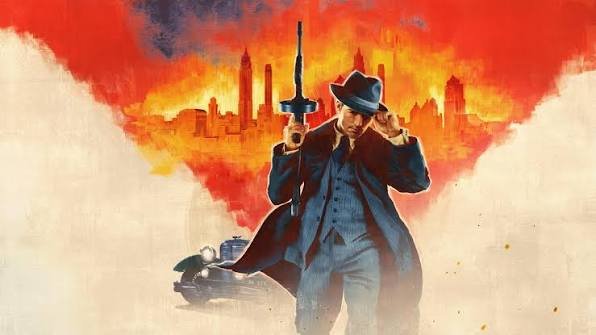
Nearly two decades separate these two versions of Mafia. But does the remake completely replace the original, or is there still a reason to experience the game that started it all?
In 2002, Czech developer Illusion Softworks released Mafia, a crime drama that stood apart from many other games of its time.
Rather than offering players a playground filled with criminal activities, Mafia focused on telling a carefully structured story about an ordinary man becoming involved in organized crime.
It had a large, explorable city, but its real attraction was its storytelling.
Eighteen years later, Hangar 13 revisited that experience with Mafia: Definitive Edition, released on September 25, 2020.
The remake brought Tommy Angelo's journey into the modern era with completely rebuilt graphics, reworked gameplay, new performances, and an expanded script.
But while Definitive Edition is undoubtedly the more modern game, that doesn't necessarily mean the original has become irrelevant.
So which version should you play today? And what exactly changed?
The Original Mafia Was Ahead of Its Time
When the original Mafia arrived on PC in 2002, open-world gaming was becoming increasingly popular.
Grand Theft Auto III had launched the previous year, demonstrating the appeal of a freely explorable city filled with criminal activities.
At first glance, Mafia appeared to offer something similar.
Its fictional American city of Lost Heaven featured traffic, pedestrians, police officers, and vehicles inspired by the 1930s.
But underneath that familiar exterior was a very different experience.
Mafia wasn't particularly interested in allowing players to create their own criminal empire.
Instead, it followed Tommy Angelo, a taxi driver whose unexpected encounter with members of the Salieri crime family draws him into a dangerous world of loyalty, betrayal, and violence.
The game told a tightly controlled story through interconnected missions, cinematic sequences, and quieter moments that allowed players to experience the atmosphere of its world.
It also placed an unusual emphasis on realism.
Vehicles were slow, heavy, and sometimes difficult to control. Police officers could punish players for traffic violations, and gunfights demanded considerable care.
These mechanics made Mafia more demanding than many other action games.
But they also helped establish its identity.
It wasn't simply trying to deliver nonstop action. It wanted players to experience the life and circumstances of its protagonist.
And that ambition remains one of the original game's most interesting qualities.
Definitive Edition Is a Remake, Not a Remaster
Before comparing the two games further, it's important to understand what Definitive Edition actually is.
Some remasters primarily improve resolution, textures, and performance while retaining most of the original game underneath.
Mafia: Definitive Edition goes considerably further.
Hangar 13 rebuilt the game using newer technology, recreating Lost Heaven, redesigning gameplay systems, and producing entirely new cinematic performances.
The developer also rewrote the script, recorded new dialogue, and reworked many scenes.
In an interview with GameSpot, Hangar 13's Haden Blackman explained that the team wanted to preserve the original game's central narrative while expanding its characters, missions, and world.
That distinction is important.
Definitive Edition recreates the same fundamental story, but it isn't an identical experience with improved graphics.
Several differences go much deeper than appearances.
Graphics and Atmosphere: A Different Lost Heaven
The most immediately noticeable difference is the presentation.
The original Mafia was visually ambitious in 2002, but its character models, environments, lighting, and animations inevitably show their age today.
Definitive Edition transforms Lost Heaven into a far more detailed city.
Its streets feature richer architecture, more convincing lighting, detailed interiors, improved weather effects, and more expressive characters.
The cinematography is also dramatically improved.
Character performances rely on modern facial animation and motion capture, making conversations and dramatic scenes feel closer to those of a contemporary crime film.
The city's layout isn't an exact block-for-block recreation, either.
Hangar 13 modified aspects of Lost Heaven, including widening some streets and adjusting road layouts to make driving more enjoyable.
However, the remake retains its recognizable districts, landmarks, and overall identity.
In terms of visual presentation, Definitive Edition is the obvious choice for players who want a modern-looking game.
But visuals aren't everything.
The original's simpler presentation creates a different atmosphere, particularly when combined with its pacing and older gameplay systems.
It's entirely possible to appreciate the remake's technical achievements while still preferring aspects of the original's mood.
The Story Is Familiar, but the Characters Have Changed
One of the biggest misconceptions about Definitive Edition is that its story is exactly the same as the original.
The overarching narrative remains recognizable.
Tommy still begins as a taxi driver, becomes involved with the Salieri family, and experiences the consequences of his increasingly dangerous criminal career.
The major plot developments and central relationships are preserved.
However, the remake substantially revises how that story is presented.
One particularly noticeable example is Sarah, Tommy's love interest.
In the original, Sarah had a comparatively limited role in the narrative.
Definitive Edition gives her additional dialogue, scenes, and characterization, providing more context for her relationship with Tommy.
Paulie also receives greater attention.
The remake explores more of his personality, motivations, and ambitions beyond simply being one of Tommy's closest associates.
Other characters have similarly been rewritten or expanded.
These changes can make the remake's relationships feel more developed, but they also alter the tone of certain interactions.
The entire English voice cast was replaced, giving familiar characters different voices and performances.
This makes comparing the two versions especially interesting.
Even when two scenes serve the same narrative purpose, differences in dialogue, delivery, and characterization can change how viewers interpret them.
Some players may prefer the remake's expanded character development.
Others may appreciate the original's more restrained approach.
Neither preference is unreasonable.
Combat: Old-School Difficulty vs. Modern Convenience
Perhaps the most significant gameplay difference is the combat system.
The original Mafia uses a traditional third-person shooting system without the kind of dedicated cover mechanics common in modern action games.
Players must position themselves carefully, manage ammunition, and approach dangerous encounters with patience.
The controls can feel awkward by modern standards, particularly when moving between cover or reacting to enemies.
However, that demanding nature is part of what made the original distinctive.
The remake adopts a more familiar third-person cover-shooter approach, incorporating mechanics developed for Mafia III.
Players can take cover, aim from behind obstacles, and engage enemies using more contemporary controls.
Melee combat and stealth have also been reworked.
The result is a more accessible experience, particularly for anyone accustomed to modern action games.
But accessibility doesn't necessarily mean every aspect is superior.
Some players may find the remake's combat more enjoyable, while others might consider its cover-based encounters comparatively conventional.
Contemporary reviews also criticized aspects of Definitive Edition's shooting mechanics, including stiff movement and repetitive enemy encounters.
So while the remake modernizes combat, it doesn't completely eliminate the original's gameplay limitations. It replaces some of them with a different set of compromises.
Driving: Realism vs. Accessibility
Driving occupies a surprisingly large part of both games.
And it's an area where the original Mafia developed a particularly strong identity.
Its vehicles were designed to reflect the technological limitations of their historical setting.
Acceleration was relatively slow, braking required care, and taking corners too aggressively could easily result in losing control.
The game's police system also encouraged players to obey traffic regulations.
Speeding or committing other violations in front of officers could result in unwanted attention.
Definitive Edition preserves aspects of this philosophy but makes driving more approachable.
Cars generally handle more smoothly, and the remake introduces additional mechanics intended to make vehicle-based action more exciting.
Motorcycles are also available, something the original game didn't offer.
However, Hangar 13 recognized that some returning players would want an experience closer to the original.
That's why Definitive Edition includes simulation driving settings, manual shifting options, and configurable police behavior.
These options make it possible to retain some of the original's demanding driving atmosphere.
Still, the underlying driving physics aren't identical.
For players who particularly enjoyed the original's vehicle simulation, that difference may be significant.
The Infamous Racing Mission Returns
It would be difficult to discuss Mafia without mentioning its notorious racing mission.
In the chapter titled Fairplay, Tommy must compete in a motor race.
The mission became infamous among players of the original game because of its difficulty, particularly in early versions before difficulty adjustments were introduced.
The combination of demanding vehicle handling, challenging corners, and the need to finish first made it a memorable obstacle.
Naturally, Definitive Edition brings the race back.
The mission's fundamental purpose remains the same, but the driving mechanics and racing experience have been reworked.
Players looking for a challenge can attempt the mission on Classic difficulty, which is designed to recreate aspects of the original's demanding gameplay.
The remake's race can still be extremely challenging, particularly on that setting.
Whether the original or remake has the more difficult race is something players continue to debate.
What matters is that Hangar 13 didn't simply remove the sequence to make the game easier.
The race remains an important and memorable part of Mafia.
For better or worse.
Free Ride and Side Activities
Despite featuring a large city, Mafia has never been a traditional sandbox game in the same sense as Grand Theft Auto.
The story remains largely linear in both versions.
However, the original offered separate Free Ride and Free Ride Extreme modes.
These gave players opportunities to explore Lost Heaven outside the main campaign, with Free Ride Extreme featuring unusual optional challenges.
The original also included optional activities involving mechanic Lucas Bertone, which could reward players with access to additional vehicles.
Definitive Edition retains a Free Ride mode and incorporates various collectibles, unlockable vehicles, hidden challenges, and secrets.
But the optional activities aren't recreated exactly as they originally appeared.
Some of the original's side content has been redesigned or incorporated into different systems.
The remake also introduces new collectibles, including cigarette cards and comic-book covers that reference the wider Mafia franchise.
This is another reason why the two games shouldn't be considered interchangeable.
Even outside the central story, there are differences in how players interact with Lost Heaven.
What the Original Still Does Better
For all its improvements, Definitive Edition inevitably changes some of what made Mafia distinctive.
The original is more mechanically demanding, and its slower pace can make the player's journey feel less like a modern action spectacle.
Its limitations are sometimes frustrating, but they also contribute to its identity.
There's an argument that those rough edges make the original feel more grounded.
Tommy isn't a superhuman action hero. He's an ordinary man who becomes involved in increasingly extraordinary circumstances.
The original's combat and driving systems reinforce that vulnerability.
The remake retains the same basic character concept, but its modernized mechanics and more elaborate action sequences produce a different sensation.
There's also value in experiencing the original writing, performances, and mission design as they were first released.
A remake can improve an older game without making the original historically or artistically irrelevant.
That doesn't mean everyone needs to play the 2002 version.
It simply means the original still offers something that cannot be entirely replicated by a modern reinterpretation.
What Definitive Edition Does Better
The remake has substantial advantages of its own.
Its visual presentation is dramatically more sophisticated, and its controls are generally more approachable.
Character animation, cinematography, and expanded dialogue help communicate the story to audiences accustomed to contemporary games.
The remake also provides additional difficulty options, making it easier for players to customize their experience.
Newcomers can enjoy a more forgiving journey, while returning fans can increase the challenge through Classic difficulty and simulation settings.
Its presentation of Lost Heaven is another major improvement.
For players interested primarily in experiencing Tommy Angelo's story, the remake makes that experience more accessible without requiring them to deal with some of the original game's most dated mechanics.
And despite the changes, it preserves the central identity of Mafia as a focused, narrative-driven crime drama.
It doesn't transform the franchise's first entry into an enormous open-world game filled with unrelated activities.
That restraint is arguably one of the remake's greatest strengths.
So, Which Mafia Should You Play in 2026?
For most newcomers, Mafia: Definitive Edition is the easier recommendation.
It offers modern graphics, updated controls, expanded characterization, and a more approachable introduction to Tommy Angelo's story.
If your primary goal is to experience the narrative, the remake is an excellent starting point.
However, that doesn't mean the original Mafia should be forgotten.
The 2002 game remains worth experiencing for players interested in older PC games, more demanding gameplay, and the original creative interpretation of the story.
Its driving, combat, dialogue, and atmosphere offer an experience that the remake doesn't entirely reproduce.
And while its age can make it difficult to approach today, those differences are precisely why it remains interesting.
The ideal choice ultimately depends on what you value.
If you want a polished, modern crime drama, choose Definitive Edition.
If you want to experience a significant piece of gaming history and don't mind outdated mechanics, the original is still worth your time.
Better yet, if you end up loving one version, consider playing the other.
Because the most interesting thing about these two games isn't simply how far technology advanced between 2002 and 2020.
It's how two different development teams approached the same story, preserving its foundations while creating experiences with distinct personalities.
Mafia: Definitive Edition may be the more accessible way to experience Tommy Angelo's journey, but the original still deserves a place in gaming history.